


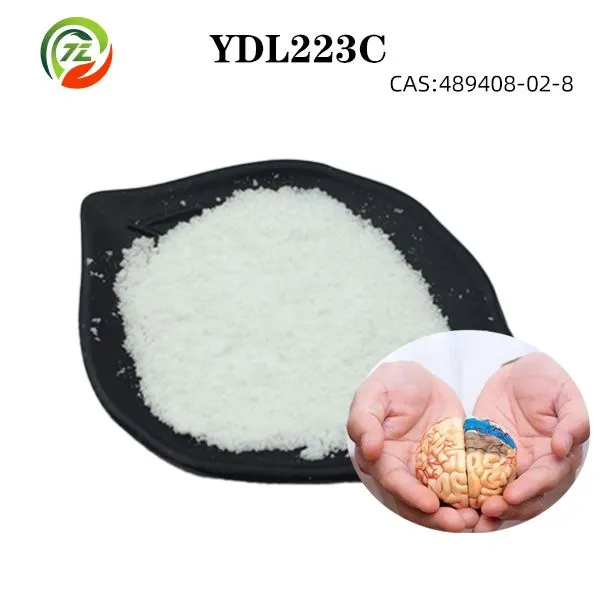
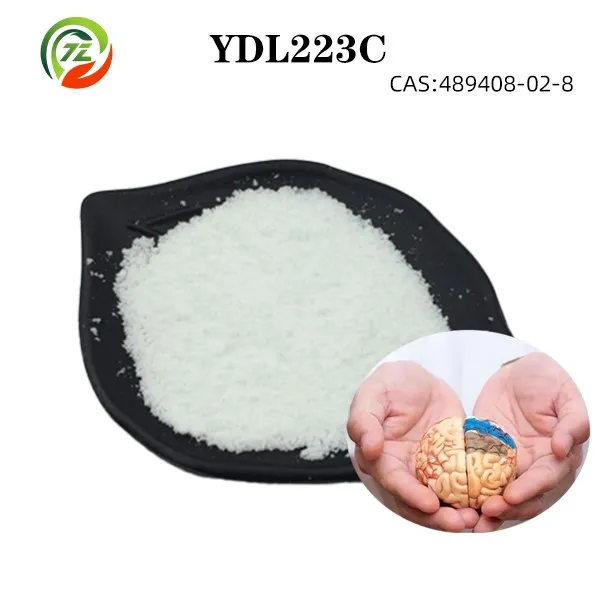
| Product Name | YDL223C / HBT1 |
| CAS Number | 489408-02-8 |
| Molecular Formula | C₁₆H₁₇F₃N₄O₂S |
| Molecular Weight | 386.39 g/mol |
| Chemical Name | 2-(2-(5-methyl-3-(trifluoromethyl)-1H-pyrazol-1-yl)acetamido)-4,5,6,7-tetrahydrobenzo[b]thiophene-3-carboxamide |
| Synonyms | HBT1, HBT-1, Compound HBT1 |
| Appearance | White to off-white / pale yellow solid powder |
| Purity | 98–99% (by HPLC) |
| Solubility | DMSO: 2 mg/mL, clear; Insoluble in water and ethanol |
| Storage Conditions | Short-term (days–weeks): 0–4°C; Long-term (months): –20°C |
Products Description
What Is YDL223C / HBT1 ?
YDL223C represents a classic case of terminology collision between academic biology and commercial chemistry:
| Context | Identity |
|---|---|
| Biology (Yeast Genetics) | A gene in Saccharomyces cerevisiae encoding a Shmoo tip protein involved in polarized cell morphogenesis |
| Chemistry / Pharma (Commercial) | A synthetic small‑molecule AMPA receptor potentiator (HBT1, CAS 489408-02-8) used in neuroscience research |
Important: Over 90% of commercial searches for "YDL223C" are looking for the chemical compound, not the yeast gene. This document focuses on the commercial chemical entity for procurement and R&D audiences.
Hot Product
Applications Of YDL223C / HBT1 ?
YDL223C (HBT1, CAS 489408-02-8) is a novel AMPA receptor positive allosteric modulator (PAM) primarily used in neuroscience research and cognitive enhancement studies. Its primary mechanism involves inducing brain-derived neurotrophic factor (BDNF) production while exhibiting minimal agonistic effects, offering advantages over older compounds that show bell-shaped dose responses.
1.Neuroscience Research
| Research Area | Specific Application |
|---|---|
| AMPA receptor function | Tool compound for studying AMPA-R mediated neurotransmission |
| Synaptic plasticity | Investigation of LTP (long-term potentiation) mechanisms |
| BDNF signaling pathways | Study of neurotrophic factor regulation |
| Neural circuitry | Understanding excitatory neurotransmission in CNS |
2.Pharmaceutical Development
1)Drug discovery – Lead compound for novel AMPA-R potentiators.
2)Therapeutic target validation – Understanding AMPA-R modulation for CNS disorders.
3)Safety pharmacology – Lower seizure risk compared to PF-4778574 (<30× safety margin in rodents).
3.Neuroprotection Research
1)Excitotoxicity studies – AMPA and NMDA receptors together promote synaptic plasticity processes involved in neuroprotection .
2)Neurodegenerative disease models – BDNF plays critical roles in neuronal maintenance and survival.
3)Neuronal health – Supports proliferation, differentiation, and survival of neuronal cells.
Disclaimer
All information provided is for scientific research and reference purposes only. YDL223C/HBT1 (CAS 489408-02-8) is not approved for human or animal therapeutic use. Products are intended for laboratory and research use in legal and non-patent regions only. Buyers assume all responsibility for compliance with local laws and regulations.
Benefits of YDL223C / HBT1 ?
1.Selective AMPA Receptor Potentiation
HBT1 binds to the AMPA-R ligand-binding domain (LBD) in a glutamate-dependent manner. This is critical because:
1)AMPA-R agonists activate all AMPA-Rs (including resting receptors), inducing desensitization and seizures .
2)HBT1 as a potentiator only enhances physiologic activation, offering a superior pharmacological profile.
Unique binding mode: HBT1 forms hydrogen bonds with S518 in the LBD - a binding mode distinct from LY451395 - contributing to its lower agonistic profile.
2.Cognitive Benefits
Based on its mechanism of action, HBT1 offers the following cognitive benefits for research applications:
| Cognitive Domain | Benefit | Mechanism |
|---|---|---|
| Memory | Enhanced memory recall and formation | BDNF-induced LTP facilitation |
| Focus | Improved attention and concentration | AMPA-R mediated synaptic transmission |
| Learning | Enhanced learning capacity | Synaptic plasticity support |
| Creativity & Intelligence | Cognitive performance optimization | Neural communication enhancement |
| Motivation | Improved drive and mental energy | Neurotrophic support |
3.Supply Benefits
| Parameter | Typical Offering |
|---|---|
| MOQ | 1 kg |
| Packaging | 1 kg/bag, 25 kg/drum |
| Monthly capacity | 100 kg |
| Documentation | COA, HPLC, MS test report |
Delivery Record

Customer Feedback
FAQ
Q: Can I get a sample for testing before placing a bulk order?
A:Yes, samples are available for qualified research institutions and commercial buyers. Sample quantities typically range from 10 mg to 100 mg. Please contact us with your research credentials and intended application to request a sample. Sample costs may apply but are typically credited toward your first bulk order.
Q: Is HBT1 approved for human consumption? Can I use it in dietary supplements?
A: No. HBT1 is for research use only and is not approved for human consumption . It is intended for laboratory and scientific research applications, including neuroscience studies, pharmaceutical development, and in vitro experiments. Buyers assume full responsibility for compliance with local laws and regulations. We do not sell this compound for human or animal therapeutic use.
Q: What is your MOQ, pricing, and delivery lead time?
A: MOQ: 1 kg (smaller samples available for R&D validation).
Lead time: In-stock items ship within 15 days; production orders require 2–4 weeks.
Q: Is YDL223C/HBT1 soluble?
A:Solubility: Soluble in DMSO at 2 mg/mL (clear solution); insoluble in water and ethanol.
Q: How should I store YDL223C/HBT1?
A:hort-term (days to weeks): 0–4°C; Long-term (months to years): –20°C.Always equilibrate the container to room temperature before opening to avoid moisture condensation.
CONTACT PAGE
1.Inquiry methods:
Email:alice@xaheshun.com
Whatspp:+8618509260106
Online instant messaging
2.Contact Information:
Name:Alice
Telephone :+8618509260106
Email:alice@xaheshun.com
Hot Tags: ydl223c / hbt1, China ydl223c / hbt1 manufacturers, suppliers, factory, 4 Aminobenzoic Acid for UV Filters, Pramoxine HCl for Skin Burn Relief, Sulforaphane for Antimicrobial Effects, Tianeptine Sodium Salt for Anxiety and Stress, Tianeptine Sodium Salt for Emotional Health, Yohimbine Hydrochloride for Muscle Gain


