


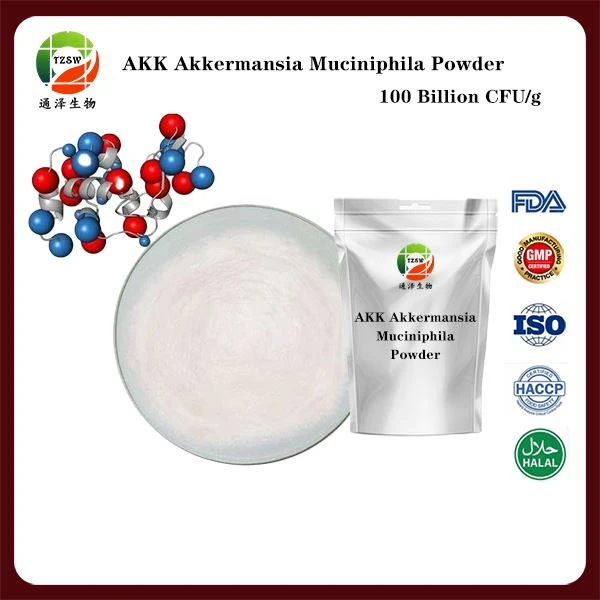
|
Product Name: |
Akkermansia muciniphila Powder |
|
Synonyms: |
A. muciniphila |
|
Appearance: |
Pale yellow powder |
|
Specification: |
100 Billion CFU/g |
|
Package: |
1kg/bag |
|
Shelf life: |
Shelf life under prescribed storage conditions and air-tight packing will be 2 years. |
|
Storage: |
Store sealed in a cool, dry place at room temperature. |
Products Description
What Is Akkermansia muciniphila Powder?
AKK, a highly regarded "star" in the intestinal microbial community, is gradually unveiling its mysterious role in delaying aging. Scientists have found that AKK bacteria are not only closely related to intestinal health, but also play a pivotal role in the aging process of the human body.
As we age, the functions of the human body gradually decline, and intestinal function is no exception. The intestine is the largest immune organ in the human body and one of the earliest organs to show signs of aging. And AKK bacteria is an indispensable "youth force" in the intestine.
Spanish researchers published a paper in the journal Natural Medicine, confirming that AKK bacteria has the effect of delaying aging.
Researchers found that after AKK bacteria were transplanted into premature mice, the survival time of these mice was extended by about 10% compared with the transplantation. In the bodies of centenarians, researchers also observed higher Akk abundance, further confirming the potential of AKK bacteria in anti-aging.
The anti-aging effect of Akk is mainly achieved by producing a variety of short-chain fatty acids in the body that cannot be supplemented exogenously. AKK can help us manage related indicators of metabolic syndrome such as high blood pressure, high blood sugar, high blood lipids, cholesterol, and fatty liver


Product COA
Certificate Of Analysis
|
Product Name |
Akkermansia muciniphila Powder |
|
||
|
Chemical Formula |
N/A |
Molecular Weight |
N/A | |
|
CAS |
N/A |
Batch Quantity |
400KG |
|
|
Batch No. |
MLP-PPH-20231114 |
Manufacture Date |
2025.11.14 |
|
|
Report Date |
2025.11.17 |
Retest Date |
2027.11.13 |
|

|
Testing Items |
Specifications | Test Results | |
|
BP2010 /EP6 |
Appearance |
crystalline powder |
Conforms |
|
Melting point |
About 205°C |
206.4°C~206.7°C |
|
|
Identification |
Meet the requirements |
Conforms |
|
|
Appearance of solution |
Clear, not more intense than Y7 |
Conforms |
|
|
PH |
2.4~3.0 |
2.60 |
|
|
Loss on drying |
≤0.5% |
0.04% |
|
|
Sulphated ash |
≤0.1% |
0.01% |
|
|
Heavy metals |
≤20 ppm |
<20 ppm |
|
|
Related substances |
≤0.25% |
Conforms |
|
|
Assay |
99.0%~101.0% |
99.8% |
|
|
USP32 |
Identification |
Meet the requirements |
Conforms |
|
Loss on drying |
≤0.5% |
0.04% |
|
|
Residue on ignition |
≤0.1% |
0.01% |
|
|
Heavy metals |
≤0.003% |
<0.003% |
|
|
Residue solvent - Ethanol |
≤0.5% |
<0.04% |
|
|
Chloride |
16.9%~17.6% |
17.1% |
|
|
Assay |
98.0%~102.0% |
100.0% |
|
|
Conclusion: The product complies with BP2010/USP32/EP6 standard |
|||
Akkermansia Muciniphila Powder – Full English Introduction

1. Definition of Akkermansia Muciniphila Powder
Akkermansia muciniphila powder is a high-concentration probiotic raw material made from the anaerobic commensal gut bacterium Akkermansia muciniphila, widely recognized as the next-generation probiotic in global microbiology research.
The Latin word muciniphila means "mucin-loving". This strain uniquely colonizes the intestinal mucus layer and feeds on gut mucin proteins.
Two mainstream commercial forms:
Live active powder: Contains viable live bacteria, usually micro-encapsulated for stomach acid resistance.
Pasteurized (inactivated) powder (postbiotic): Heat-killed bacteria retaining bioactive proteins (Amuc_1100) and metabolites, with superior stability and longer shelf life.
Standard high-purity raw powder reaches billions of colony-forming units (AFU/TFU) per gram, used for dietary supplement manufacturing.
2. Core Efficacy & Biological Functions (Professional English Description)
1) Repair & Strengthen Intestinal Barrier (Core Function)
It degrades old intestinal mucin and stimulates goblet cells to secrete thicker, healthier new mucus lining; upregulates tight-junction proteins to seal gut epithelium gaps.
Relieve leaky gut syndrome; block lipopolysaccharide (LPS, endotoxin) leakage into blood to reduce systemic low-grade inflammation.
Alleviate abdominal discomfort, irritable bowel syndrome (IBS), mild diarrhea and constipation by restoring mucosal homeostasis.
2) Regulate Metabolism, Support Healthy Weight & Fat Management
Clinical and preclinical trials confirm its strong metabolic benefits:
Boost secretion of GLP-1 and PYY appetite-suppressing hormones to enhance satiety, reduce overeating.
Activate brown adipose tissue (BAT) to raise resting energy expenditure; shrink visceral fat and adipocyte size.
Lower BMI, total cholesterol, triglycerides and LDL; elevate HDL "good cholesterol".
Improve insulin sensitivity, stabilize fasting blood glucose and HbA1c for prediabetes and type 2 diabetes populations.
3) Reduce Chronic Systemic Inflammation & Antioxidation
Suppress pro-inflammatory cytokines (TNF-α, IL-6) via the TLR2/NF-κB pathway; ease inflammation linked to obesity, fatty liver and joint discomfort.
Its outer membrane protein Amuc_1100 boosts SOD antioxidant activity, lowers oxidative stress markers (MDA) to protect cells from free radical damage.
4) Protect Liver & Prevent Non-Alcoholic Fatty Liver Disease (NAFLD)
Improve gut-liver axis balance, reduce hepatic lipid accumulation, relieve liver lobular inflammation and fat ballooning in fatty liver models.
5) Modulate Immune Function
A thick mucus barrier prevents pathogens and harmful bacteria invasion; balance mucosal immune responses to lower risk of gut infections and mild allergies.
6) Cardiovascular Protection
Cut blood lipid levels, inhibit vascular endothelial inflammation, and reduce atherosclerosis risk factors linked to metabolic syndrome.
7) Emerging Brain-Gut Axis Benefits
Preliminary research shows it may alleviate neuroinflammation, slow abnormal alpha-synuclein aggregation, and deliver supportive effects for mood balance and neurodegenerative health.
Main Industrial & Commercial Applications
1) Dietary Supplement Raw Material (Largest Market)
Weight management capsules, powders and sachets for overweight/obese consumers.
Gut repair supplements targeting leaky gut, IBS and post-antibiotic gut flora recovery.
Metabolic support formulas for blood sugar and lipid control.
Liver health compound blends combined with milk thistle, berberine and inulin.
Postbiotic single-ingredient supplements (pasteurized Akkermansia powder) for sensitive users who cannot tolerate live probiotics.
2) Functional Food & Beverage Additive
Added to yogurt, functional milk drinks, meal replacement shakes and fiber granola to enhance gut-friendly nutrition.
3) Clinical Nutrition & Medical Research
Used in hospital nutritional formulas for patients with metabolic disorders, inflammatory bowel conditions and insulin resistance; raw material for gut microbiology lab trials.
4) Compound Probiotic Blends
Mixed with Bifidobacterium, Lactobacillus and prebiotics (inulin, GOS/FOS) to build multi-strain gut balancing formulas.
4. Key Advantage of Pasteurized Akkermansia Powder
Unlike live probiotics requiring cold storage, pasteurized powder stays stable at room temperature for 2–3 years; its bioactive proteins retain full efficacy without risk of bacterial die-off during shelf transport and storage.
Safety Profile of Akkermansia Muciniphila Powder
1. Overall Safety Conclusion
Akkermansia muciniphila naturally resides in healthy human intestinal tract (accounting for 1%–5% of total gut microbes). Two powder forms exist: pasteurized (heat-inactivated postbiotic powder) and live viable probiotic powder.
Pasteurized powder: Officially recognized as safe novel food by EFSA and UK FSA; passed repeated-dose toxicology trials; no severe adverse reactions reported in human clinical trials within standard dosage range.
Live strain powder: Generally well-tolerated by healthy adults, but carries theoretical safety risks for vulnerable populations.
EFSA confirmed the safe maximum daily intake for adults: 3.4 × 10¹⁰ pasteurized bacterial cells per day; viable residual bacteria in pasteurized powder must be less than 10 CFU/g to eliminate infection risks.
2. Mild & Transient Side Effects (5%–15% of new users, temporary only)
These digestive discomforts usually disappear within 1–2 weeks as gut flora adapts:
Bloating, excessive flatulence, mild stomach cramping
Loose stool or slight diarrhea, occasional mild constipation
Minor stomach rumbling after taking powder Trigger factors: Starting with high dose, empty-stomach intake, initial imbalance of gut flora. Solution: Start with half standard dose, take with meals rich in fiber or fat, split daily dosage into two servings.
Rare hypersensitivity: Very few users show mild skin itch or rash, mostly caused by auxiliary excipients in powder rather than Akkermansia itself; discontinue use once allergic signs occur.
3. Key Safety Difference: Pasteurized vs Live Akkermansia Powder
Pasteurized (Heat-Killed) Powder (Higher Safety Grade)
No live replicable bacteria; zero risk of bacterial translocation, infection or over-colonization in gut
Retains core bioactive Amuc_1100 protein and metabolites to deliver gut barrier & metabolic benefits
Stable at room temperature, no cold storage requirement
Approved for teenagers above 12 years old and healthy adults in EU regulatory standards
Live Viable Akkermansia Powder (More Potential Risks)
Theoretical infection risk for severely immunocompromised people: Live bacteria may enter blood circulation and trigger bacteremia
Risk of excessive mucin degradation: Overgrowth may erode intestinal mucus layer in patients with damaged gut lining
Strict anaerobic storage demand; large bacterial death loss during shelf life leads to unstable efficacy
Not recommended for people with gut inflammation or weak immunity
4. Contraindicated & High-Risk Populations (Must Avoid or Consult Doctor First)
Groups Not Recommended to Supplement
Patients with active inflammatory bowel disease (IBD: ulcerative colitis, Crohn's disease) Akkermansia breaks down intestinal mucin; pre-damaged gut barrier may get aggravated, possibly worsening colon inflammation in animal trials.
Severely immunocompromised crowds Organ transplant recipients, patients on long-term immunosuppressants, chemotherapy patients, advanced HIV carriers - live powder is strictly forbidden; pasteurized version requires physician approval.
Pregnant women & breastfeeding mothers Lack complete long-term clinical safety data for fetal/infant gut development; regulatory authorities do not recommend supplementation.
Children under 12 years old Immature intestinal mucosa and microbiome; no established safe pediatric dosage standard.
Patients with active intestinal infection (salmonella, bacterial enteritis) May interfere with mucosal self-repair and extend recovery time.
Populations Require Medical Consultation Before Use
Colorectal cancer patients or high-risk groups with family history Some observational studies detect higher Akkermansia abundance in colorectal cancer patients; combined effects remain controversial, avoid self-supplementation.
Patients taking long-term antibiotics Antibiotics kill Akkermansia and weaken its efficacy; resume powder 1–2 weeks after finishing antibiotic courses.
Patients with diabetes, fatty liver or polycystic ovary syndrome (PCOS) Monitor blood glucose and hormone indicators regularly during supplementation.
5. Dose-Related Safety Risks
Standard safe daily dose: 1 × 10⁹ ~ 3.4 × 10¹⁰ pasteurized cells
Excessive long-term high intake (far above 5×10¹⁰ cells/day): Aggravates gastrointestinal discomfort (persistent diarrhea, stomach pain)
No lethal toxicity (LD50) observed in animal toxicology tests even at ultra-high doses; all adverse reactions reverse quickly after stopping intake
6. Drug & Supplement Interactions
Broad-spectrum antibiotics: Greatly reduce Akkermansia activity; separate administration by at least 4 hours or pause probiotic intake during antibiotic treatment
Immunosuppressants (tacrolimus, infliximab): Live powder is prohibited; pasteurized powder needs professional medical guidance
Other high-dose multi-probiotic blends: Avoid stacking multiple mucin-degrading strains simultaneously to prevent mucus layer over-consumption
7. Long-Term Supplementation Safety
Continuous human clinical trials last up to 12 weeks with zero serious adverse events reported. For long-term daily use over 3 months:
Choose pasteurized powder instead of live strain to lower hidden risks
Stop supplementation for 1–2 weeks every 3 months to maintain natural gut flora balance
If persistent diarrhea, abdominal pain or abnormal stool bleeding occurs, cease use and seek gastroenterology examination immediately
How to Take Akkermansia Muciniphila Powder
1. Distinguish Two Forms & Corresponding Dosages
Pasteurized (Heat-Inactivated) Akkermansia Postbiotic Powder (Market mainstream, stable, safer)
Maintenance daily dose: 1×10⁹ ~ 1×10¹⁰ cells/day
Therapeutic dose (weight management, blood sugar & lipid regulation, gut barrier repair): 2×10¹⁰ ~ 3.4×10¹⁰ cells/day
Upper safe limit: Do not exceed 3.4×10¹⁰ cells daily for long-term use
Live Active Akkermansia Probiotic Powder
Standard daily dose: 5×10⁸ ~ 5×10⁹ CFU/day
Higher doses easily trigger bloating and loose stools, overdosing is not advised
Tolerance Build-Up Dose (All new users)
Take half the standard full dose for the first 7–14 days to adapt the gut microbiome. Gradually raise to full dose only if no stomach discomfort occurs.
2. Best Taking Time
Take with meals or immediately after eating Food buffers gut irritation and improves bacterial retention inside intestines.
Do not take on an empty stomach Empty intake greatly increases risks of abdominal gurgling, flatulence and mild diarrhea.
Maintain a fixed daily time to keep steady intestinal flora concentration.
3. Mixing & Drinking Methods
Dissolve in mild-temperature liquid (temperature ≤40°C, no boiling hot water) Options: room-temperature pure water, milk, yogurt, plant milk, fruit smoothies High temperature destroys active proteins (pasteurized type) and kills live bacteria, losing efficacy.
Mix into soft food Stir evenly into oatmeal, cold porridge, yogurt or low-temperature meal replacement powder.
Fill into empty vegetarian capsules Ideal for users who dislike the natural earthy taste of raw powder.
4. Important Administration Rules
Interval with antibiotics Separate intake by at least 4 hours. Antibiotics suppress Akkermansia activity; better pause powder supplementation during antibiotic treatment and resume 1–2 weeks after finishing the course.
Avoid stacking multiple mucin-degrading probiotics Concurrent high doses of Akkermansia plus other mucus-eating strains may overconsume the gut's protective mucus layer and cause persistent abdominal discomfort.
Match with prebiotics for enhanced effects Pair with inulin, FOS, GOS or high-fiber foods. Prebiotics serve as nutrition for Akkermansia and amplify its metabolic and gut-protective benefits.
5. Storage Requirements
Pasteurized powder Seal tightly, store in cool, dry, shaded environment at room temperature; refrigeration is unnecessary.
Live viable powder Must be refrigerated at 2–8°C. High ambient temperature leads to massive bacterial deactivation and potency loss.
6. Recommended Usage Cycle
Continuous daily use for 8–12 weeks to observe obvious improvements in intestinal health, blood lipids and weight status.
After 3 months of uninterrupted supplementation, stop for 1–2 weeks as an off-cycle break to prevent artificial disturbance of native gut flora balance.
7. Special Population Adjustments
Sensitive stomach / mild IBS crowd Stick to low tolerance dose for 2–4 weeks before dosage escalation; choose pasteurized powder rather than live strains.
Overweight, prediabetes and fatty liver population Adopt full therapeutic dose with consistent high-fiber, low-sugar diet for optimal results.
Immunocompromised patients, active IBD sufferers, pregnant women and children under 12 Self-supplementation is not recommended; professional consultation with a gastroenterologist is mandatory before use.
Potential Side Effects of Akkermansia Muciniphila Powder
Side effects differ slightly between live active Akkermansia powder and pasteurized (heat-inactivated) postbiotic powder. Most reactions are mild, transient gut discomfort that only appear in the first 1–2 weeks as the gut microbiome adapts, and they resolve spontaneously without lasting harm.
1. Common Mild Digestive Side Effects (Most frequent, low risk)
These occur mostly when starting supplementation with a high initial dose or taking it on an empty stomach:
Abdominal bloating and excessive flatulence The strain breaks down intestinal mucin and modulates native gut bacteria, temporarily altering fermentation gas production.
Stomach gurgling, mild cramping or dull abdominal discomfort
Temporary irregular bowel movements
Some users get loose stools or mild diarrhea;
A small number experience short-term constipation before gut balance stabilizes.
Relief methods:
Start with half the standard dosage, take alongside meals containing fiber or healthy fats, and avoid fasting intake.
2. Rare Hypersensitivity & Skin Reactions
True allergy to Akkermansia itself is extremely uncommon. Most allergic signs stem from excipients (maltodextrin, lactose, vegetable carriers) in the powder formulation:
Slight skin itching, scattered faint rash or facial flushing If allergic symptoms emerge, discontinue consumption right away.
3. Special Risks Unique to Live Akkermansia Powder (not seen in pasteurized powder)
Heat-killed pasteurized products contain no replicable bacteria, so they avoid these hazards entirely:
Theoretical risk of bacterial translocation For severely immunocompromised people, live bacteria may cross a damaged intestinal barrier into the bloodstream, potentially triggering bacteremia or systemic infection.
Over-degradation of intestinal mucus layer Long-term high-dose live strains may excessively break down gut mucin, which could irritate patients with pre-existing fragile gut lining (active ulcerative colitis, Crohn's disease).
4. Side Effects Triggered by Overdose
Taking doses far above the recommended daily maximum (over 3.4×10¹⁰ pasteurized cells daily) amplifies gastrointestinal distress:
Persistent diarrhea
Severe bloating and recurrent stomach ache All such symptoms fully reverse once intake is stopped or dosage is reduced. No permanent organ toxicity has been recorded in clinical trials.
5. Indirect Adverse Reactions in Vulnerable Populations (Not typical side effects, but critical safety risks)
These groups may develop aggravated underlying conditions rather than general mild discomfort:
People with active inflammatory bowel disease (IBD) Mucin-degrading activity may worsen intestinal inflammation, abdominal pain and diarrhea.
Immunocompromised individuals (transplant patients, chemotherapy recipients, long-term steroid users) Live Akkermansia carries infection risks; pasteurized versions require a doctor's prior approval.
Pregnant, breastfeeding women and children under 12 Insufficient long-term safety data exists; unexpected disruptions to developing gut flora could occur.
Patients with colorectal cancer or high familial risk Unbalanced high Akkermansia levels may interfere with intestinal mucosal surveillance, so self-supplementation is not advised.
6. Interaction-related Discomfort
Broad-spectrum antibiotics: Kill Akkermansia and disrupt gut balance, leading to bloating and loose stool if taken simultaneously. Separate doses by at least 4 hours.
Multiple high-dose probiotic blends containing mucin-consuming strains: Combined use may overconsume protective gut mucus and trigger persistent stomach upset.
How Long Does It Take for Akkermansia Muciniphila Powder to Take Effect
1. Short-term gut comfort improvements (1–2 weeks)
These mild digestive changes appear fastest as gut flora adapts:
Reduced bloating, less excessive flatulence, quieter stomach gurgling
More regular bowel movements (relief from mild constipation or loose stool)
Less post-meal abdominal distension
Note: Some people experience temporary bloating in the first 3–7 days before these positive effects kick in, especially if starting at full dose directly. Using a low introductory dose minimizes this transition discomfort.
2. Medium-term visible metabolic & gut barrier benefits (4–8 weeks of daily consistent use)
This is the key cycle where measurable improvements emerge for most users:
Gut barrier: Less gut sensitivity to greasy/spicy food; reduced mild food-induced inflammation
Weight & appetite: Lower craving for sugar, stronger satiety after meals, slow reduction of visceral belly fat
Blood lipid & glucose: Stabilized fasting blood sugar, mild drop in triglycerides and LDL cholesterol
Skin: Fewer inflammatory breakouts linked to leaky gut and metabolic imbalance
Most human clinical trials set an 8-week observation window to confirm significant shifts in Akkermansia abundance and related metabolic markers.
3. Long-term deep systemic protective effects (12 weeks or longer continuous intake)
These long-lasting physiological changes require sustained supplementation and cannot be felt immediately:
Full repair of intestinal mucus layer: Lower systemic inflammation, less fatigue caused by chronic low-grade inflammation
Liver support: Improved fatty liver indicators (reduced hepatic fat accumulation)
Stable weight management: Sustained healthy body composition without rebound weight gain
Immune balance: Less frequent mild gut-related allergies and indigestion
Key Factors That Speed Up or Delay Results
Powder form Pasteurized postbiotic powder works faster for gut soothing; live strains take slightly longer to colonize the intestinal mucus layer.
Dosage Full therapeutic dose (2×10¹⁰–3.4×10¹⁰ cells/day) shows clear changes in 4–6 weeks; low maintenance dose takes 8–12 weeks for obvious effects.
Diet coordination Pairing with prebiotic fiber (inulin, oats, vegetables) accelerates Akkermansia proliferation; high-sugar, high-fat processed diets slow down efficacy greatly.
Gut initial condition People with severe leaky gut, long-term antibiotic damage or obesity need the full 12-week cycle; those with only mild imbalance see improvements within 3–4 weeks.
Irregular dosing Skipping days breaks steady flora concentration and extends the waiting time noticeably.
Product list
| Strains | Code |
| Lactiplantibacillus plantarum | Lp-G18,ZJUF T17,ZJUF T34,ZJUF N1,YS1,J26 |
| Lacticaseibacillus casei | LC-G11 |
| Lacticaseibacillus paracasei | LPc-G110 |
| Lacticaseibacillus rhamnosus | Lr-G14/JL1 |
| Lactobacillus acidophilus | LA-G80 |
| Limosilactobacillus reuteri | LR-G100 |
| Limosilactobacillus fermentum | LF-G89 |
| Lactobacillus helveticus | LH-G51 |
| Lactobacillus crispatus | Lc-G22 |
| Lactobacillus gasseri | LG-G12 |
| Lactobacillus delbrueckii subsp.bulgaricus | LB-G40 |
| Ligilactobacillus salivarius | LS-G60 |
| Streptococcus salivarius subsp. thermophilus | ST-G30 |
| Bifidobacterium animalis subsp. lactis | BL-G101 |
| Bifidobacterium bifidum | BB-G90 |
| Bifidobacterium longum subsp. longum | BL-G301 |
| Bifidobacterium breve | BB-G95 |
| Bifidobacterium longum subsp. infantis | Bl-G201 |
| Leuconostoc mesenteroides subsp.mesenteroides | LM-G27 |
| Lacticaseibacillus casei | LC-G11 |
| Bifidobacterium adolesentis | BQ-G66 |
| Pediococcus pentosaceus | PP-G15 |
| Pediococcus acidolactici | PA-G73 |
| Lactobacillus johnsonii | LJ-G55 |
| Lactobacillus delbrueckii subsp.lactis | LL-G41 |
| Latilactobacillus kefiranofaciens subsp.kefiranofaciens | LK-G03 |
| Latilactobacillus sakei | LS-G23 |
| Latilactobacillus curvatus | LC-G33 |
| Lactococcus lactis subsp.lactis | LLL-G25 |
| Lactococcus cremoris | LLC-G42 |
| Weizmannia coagulans | BC-G44 |
| Enterococcus faecalis | EP-GA65 |
| Enterococcus faecium | SF-GA12 |
| Saccharomyces boulardii | SD-G19 |
| Bacillus subtilis | BS-GA28 |
| Bacillus licheniformis | BL-GA26 |
| Akkermansia muciniphila | BG-001/WST01 |
Delivery Time:Around 3-5 workdays after your payment.
Package:1kg/aluminium foil bag;25Kgs in fiber-drums with two-plastic bags inside
Net Weight:25kgs/Drum/Gross Weight:28kgs/Drum
Drum Size & Volume:I.D.42cm × H52cm,0.08 m³/Drum
Storage:Stored in dry and cool place,keep away from strong light and heat.
Shelf Life:Two years when properly stored.
|
Package |
1kg/bag ,25kg/bag;25kg/drum; customize as customer's equirements. |
|||
|
Transit |
Fedex, TNT,DHL,EMS,and so on. |
|||
|
Shipping port |
Shanghai/Tianjin/Dalian/Beijing/Xi'an |
|||
|
Lead Time |
1-2 working days upon received the payment |
|||
|
For mass orders, it will be delivered by air or sea. |
||||


FAQ
Q: 1. I want to know more details about the product, how can I contact you?
A: You can send us an email inquiry at any time. For more accurate quotes, I need the following information: product name, order quantity, receipt country, quality requirements, etc.
Q: 2. How do I know if your products are real or fake?
A: We will inspect every shipment. I can provide test reports including HPLC, MS and HNMR if you want. Please find a professional chemist to help you confirm the authenticity of the test report.
Of course, you can also purchase samples to take you around your trust.
Q: 3. How do you ensure the safety of the package I receive?
A: I want to receive the package safely, I first need to know your delivery address, do you have a preferred courier method, did you buy it from China?
Why do you want to know?
Because each country has different requirements for imported packages, especially chemical products, you need to know the basic information to provide you with the safest choice.
At present, we have professional customs clearance agents in EU countries, the United States, the United States, Canada, and Southeast Asia. We have professional customs clearance agents to ensure the safety of packages.
Q: 4. How to pay?
A: Our payment channels include bittoin, bank card, Western Union, Allegitudes, etc.
It is usually recommended that customers pay with Bitcoin, because the fee is low, the entry speed is fast, and the security is guaranteed.
Q: 5. How long does it take to receive the package?
A: This will vary according to the delivery method you choose. I will briefly introduce our commonly used special lines.
Usually European countries 10-15 days after sending you the tracking number.
In the United States and Canada, it usually takes 7-10 days.
Southeast Asian countries are 3-7 days.
Hot Tags: akk akkermansia muciniphila powder, China akk akkermansia muciniphila powder manufacturers, suppliers, factory, Berberine for Blood Pressure Control, Berberine for Blood Sugar Normalization, Berberine for Cholesterol Control, Fenbendazole for Dog Deworming, Melatonin for Sleep Aid, Tianeptine Sodium Salt Powder


